Get your 𐤉𐤄𐤅𐤄 (Yahuah) witnessing bookmarkers today! click here

STUDY GUIDE: THE CORRUPTION OF THE PRIESTHOOD
This guide traces the systemic rebellion against the Torah regarding the Office of the High Priest. For centuries, the priesthood was a sacred, lifelong appointment for the Zadokite line of the tribe of Levi. This period documents the transition of the office into a political tool, eventually held by non-Levites and puppet rulers.
LBH.Church
3/8/20262 min read
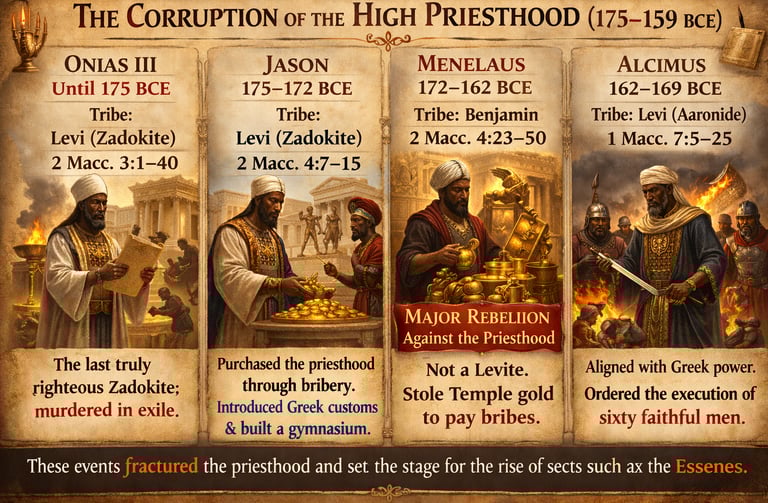
Phase 1: The Pre-Revolt Corruption (The Hellenizers)
Before the Maccabean uprising, the Priesthood was sold to the highest bidder by the Seleucid Greeks, marking the first major break in the Zadokite lineage.
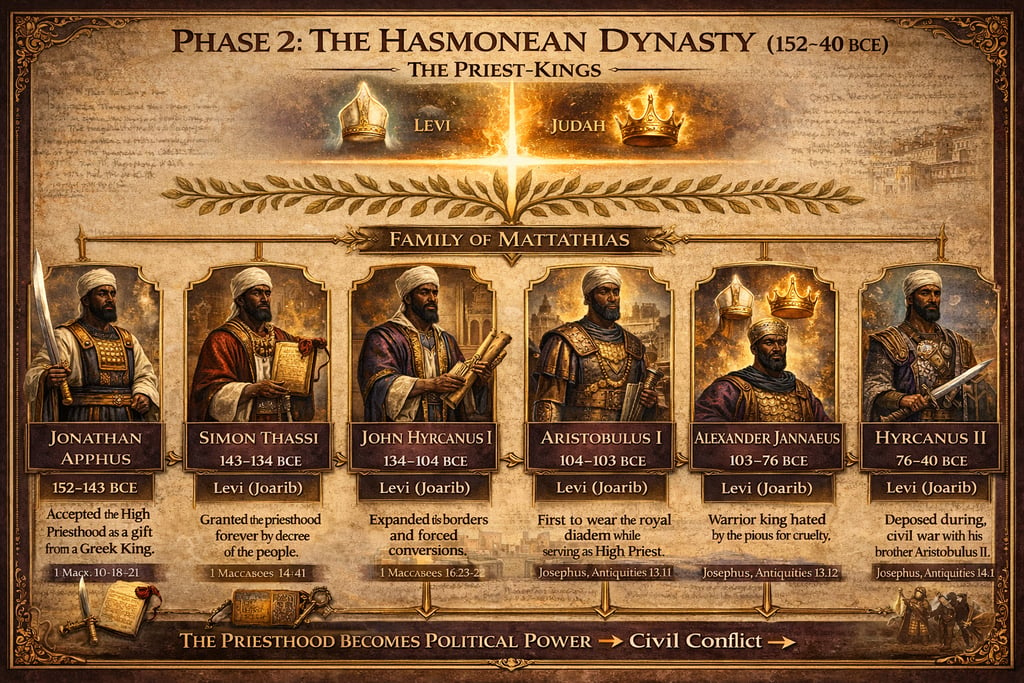
Phase 2: The Hasmonean Dynasty (The Priest-Kings)
The Hasmoneans (Maccabees) were legitimate Levites but were not of the specific Zadokite line. They eventually combined the offices of King and Priest—a move many saw as a rebellion against the separate roles of King (Judah) and Priest (Levi).
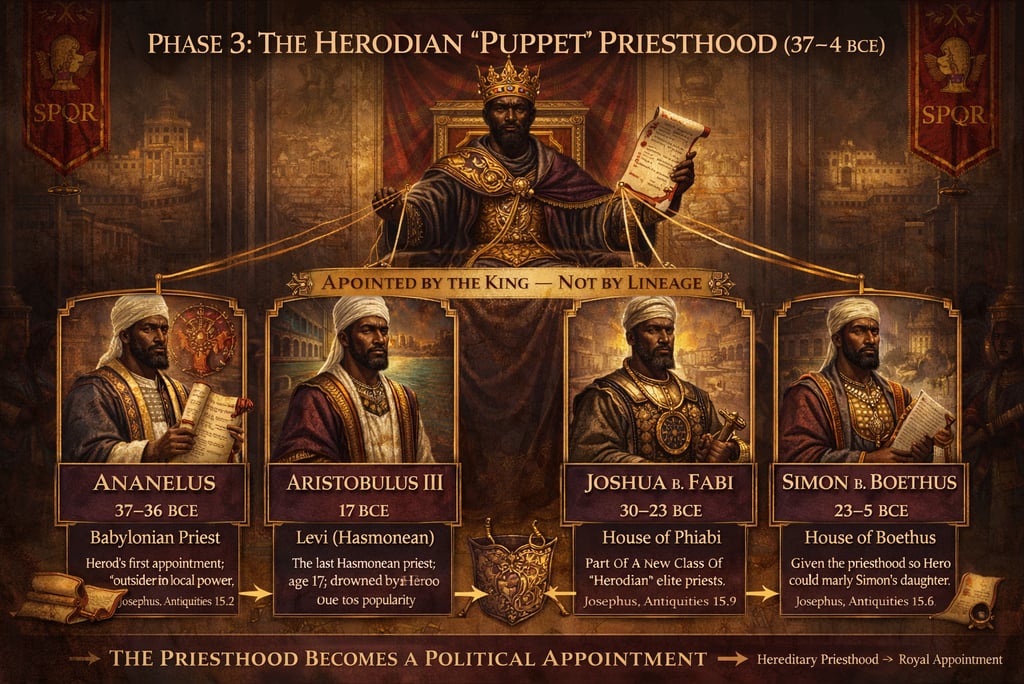
Phase 3: The Herodian "Puppet" Priesthood
When Herod the Great (an Idumean/Edomite) took power, he completely dismantled the hereditary priesthood. He began appointing non-Hasmoneans from various families to ensure they remained loyal to him, not the Law of Yahuah.
Summary for Discussion
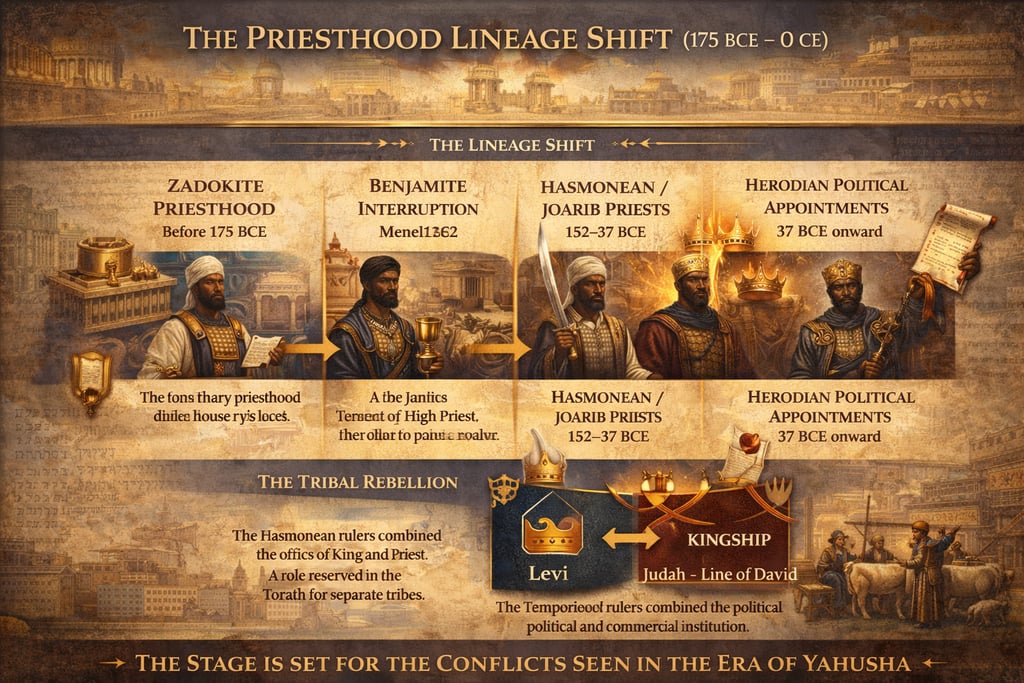
The Lineage Shift: The priesthood moved from Zadokite (pre-175 BCE) → Benjamite (Menelaus) →Hasmonean/Joarib (152 BCE) → Political Appointees (37 BCE onwards).
The Tribal Rebellion: The most significant rebellion against the Torah was the appointment of Menelaus (a Benjamite) and the later Hasmonean decision to act as Kings, a title reserved for the line of David (Tribe of Judah).
The Outcome: By 0 CE, the "House of Annas" and the "House of Boethus" controlled the Temple as a commercial enterprise, setting the stage for the conflicts seen in the life of Yahusha.
Study Tip: Note how 1 Maccabees is pro-Hasmonean, while 2 Maccabees is more focused on the Temple's sanctity. Josephus provides the "behind-the-scenes" political corruption that the biblical books leave out.